Posts now cite published studies
Readers trust a claim more when they can check it. In fields like health, psychology, coaching or nutrition, a post is judged by the research behind it. Posts on paid plans now cite more published studies, choose them better and link each one to its paper.
More studies behind each post
Until now, a post on a research-heavy topic cited one or two studies. Now it draws on every study that bears on what a section says. In our tests on psychology topics, posts went from about two cited studies to four or five.
A study is cited only where it backs a point the post makes, and never for something the study doesn't say. Topics that research doesn't answer well, such as a how-to or a price, get no studies.
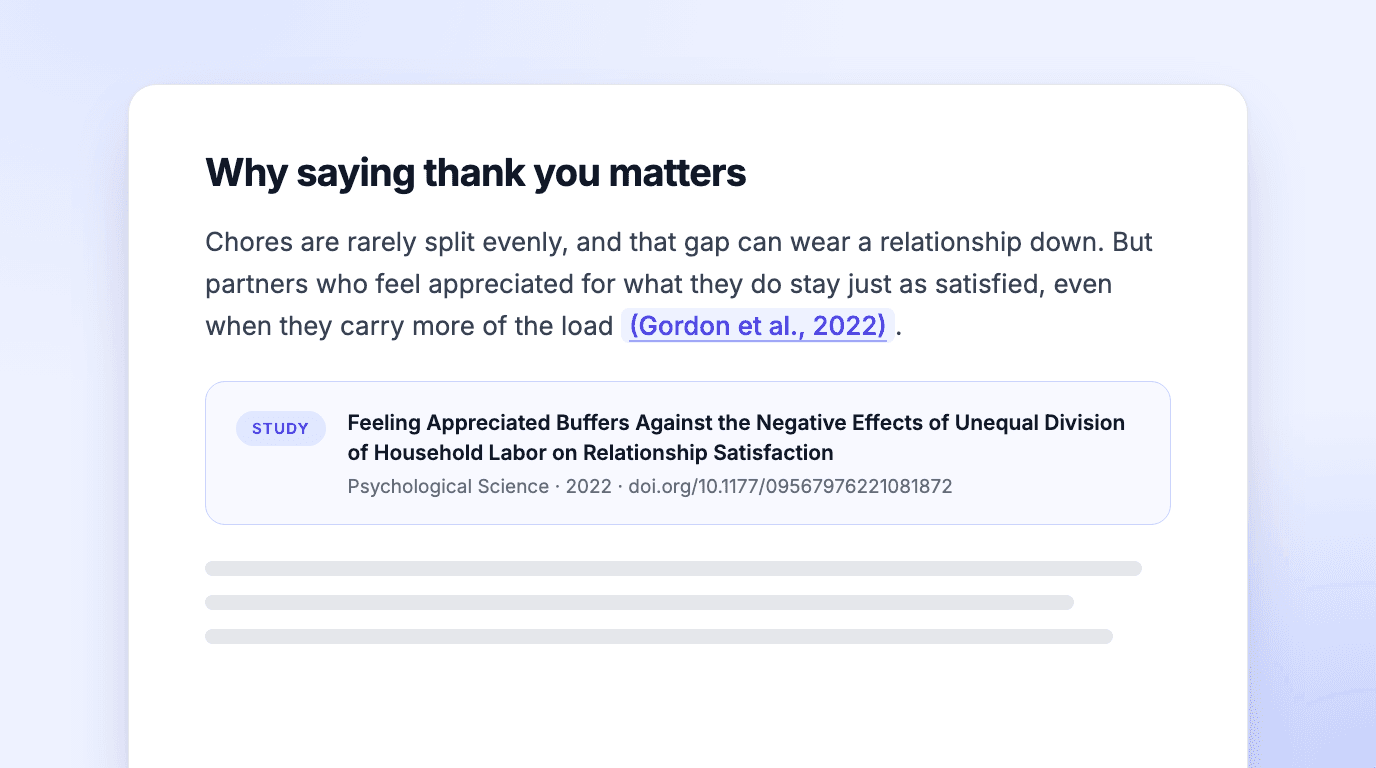
Real papers, linked to the source
Every cited study is a published paper found for that post's topic. None is quoted from memory, so a post never cites a study that doesn't exist. Each citation names the authors and the year and links to the paper, so readers can check a claim for themselves.
Nothing to set up
It works on paid plans in every campaign that has Authority outbound links on, whichever AI model the campaign uses. Studies don't come from your list of authority sources, so a campaign without any still gets them. New posts get them; posts that are already published don't change.
See what a post drew on
To see which studies a post drew on, open its run in the customer portal. The Research card lists them under Published studies read.